Your Home Is Worth What a Buyer Will Pay — Not What You List It For
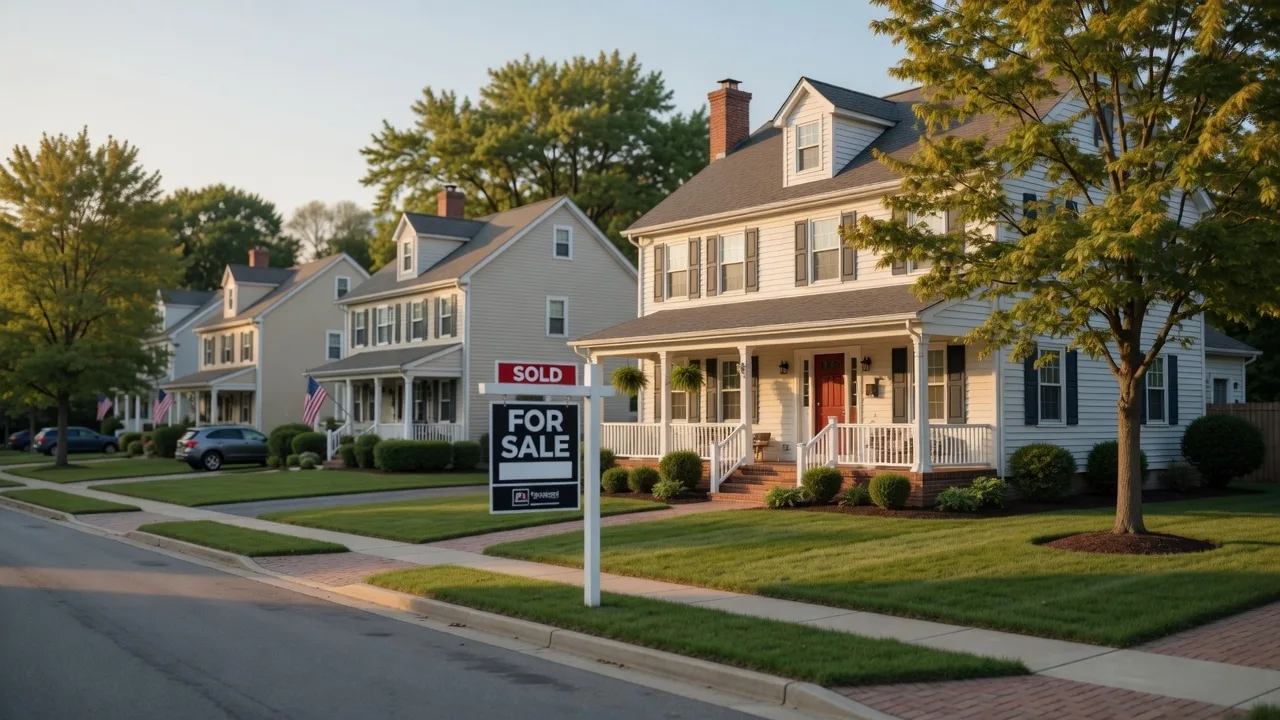
Here's a question every seller should ask before signing a listing agreement: Is the number on the price tag the same as the number in a buyer's bank account? The answer is almost always no. A home's asking price is an invitation to negotiate — its true market value is determined by what a willing, qualified buyer will actually pay based on comparable sales, current demand, and the condition of your property. Confusing the two can cost you months and thousands of dollars.
The Asking Price Myth
Many sellers believe that listing their home at a higher price gives them room to negotiate down. In reality, the opposite happens. Buyers and their agents are armed with the same market data you are — recent comparable sales, days on market statistics, and current inventory levels. When your asking price doesn't align with that data, experienced buyers see it as either a signal that the seller isn't serious or that something is wrong with the property.
Your home is worth what a buyer will pay for it on the open market. Not what you owe on the mortgage, not what you spent on renovations, and not what your neighbor told you theirs sold for six months ago. Market value is determined by supply, demand, condition, and — most importantly — the data from recent comparable sales.
What Happens When You Overprice
Overpricing triggers a predictable chain of events that works against sellers at every turn:
Fewer Showings
Buyers filter searches by price range. A home priced $20,000–$40,000 above comparable properties falls outside the search parameters of buyers who could actually afford it. The buyers who do see it skip it because the data tells them it's overpriced.
Longer Days on Market
Every week a home sits unsold reduces buyer interest. Listings that age past 30 days are increasingly viewed with suspicion — buyers assume there must be an issue. The longer a home lingers, the more leverage shifts to buyers who do show interest.
Inevitable Price Cuts
When showings dry up and no offers come in, the only option is a price reduction. But by that point, the market has moved on. Buyers now see a price drop history in the listing and wonder: What's wrong with this house? A price cut after overpricing often results in a final sale price below what the home would have sold for if priced correctly from day one.
Carrying Costs Add Up
Every month a home doesn't sell is another month of mortgage payments, insurance, utilities, HOA fees, and maintenance — all while you're paying to maintain a home you're trying to leave. These hidden costs of overpricing rarely show up in the initial conversation, but they show up fast on your bank statement.
Two Homes. One Street. Different Outcomes.
Consider a real scenario that plays out in neighborhoods across Santa Clarita and Southern California every month:
Home A — a 3-bedroom, 2-bathroom home in a popular Santa Clarita neighborhood — is listed at $870,000, roughly $20,000 above comparable recent sales. The seller's reasoning: "Let's leave room for negotiation." The home receives 4 showings in the first two weeks, zero offers, and the listing goes quiet. After 45 days, a price reduction to $850,000. After 60 days, another reduction to $839,000. At 90 days, the home finally sells — for $828,000, $42,000 below the original asking price and $22,000 below what the market would have supported from the start.
Home B — a comparable 3-bedroom, 2-bathroom home one street over — is listed at $849,000, aligned with recent comparable sales. The agent performs a thorough Comparative Market Analysis (CMA) and prices strategically. The home receives 12 showings in the first week, 3 offers, and sells in 14 days for $855,000 — above asking price — with favorable terms for the seller.
Home A sat for 90 days. Home B sold in 14. The difference wasn't the house, the neighborhood, or the market — it was the pricing strategy.
Why a Comparative Market Analysis Changes Everything
A Comparative Market Analysis — or CMA — is the foundation of smart pricing. It's not a Zillow estimate or a gut feeling. A proper CMA examines recently sold homes that are similar in size, condition, location, and features to yours, typically within a one-mile radius and the last 3–6 months. It accounts for:
- Recent closed sales (what buyers actually paid)
- Active listings (your current competition)
- Expired and withdrawn listings (homes that didn't sell)
- Days on market trends for comparable properties
- Adjustments for upgrades, condition, lot size, and views
- Current supply and demand in your specific neighborhood
This is how professionals determine what a home is actually worth in today's market — and why working with an agent who digs into the data rather than guessing can be the difference between selling in weeks and sitting for months.
How Overpricing Affects Your Net Proceeds
Some sellers think overpricing can't hurt because they'll just negotiate down later. But here's the math that often gets overlooked:
| Scenario | Outcome |
|---|---|
| Priced correctly ($849K) | Sold in 14 days for $855K. Minimal carrying costs. Clean negotiation. Strong terms. |
| Overpriced ($870K) | Sold in 90 days for $828K after two price cuts. 3 months of carrying costs. Stigmatized listing. Weaker negotiating position. |
The overpriced home sold for $27,000 less than the correctly priced home — before accounting for three extra months of mortgage payments, insurance, and utilities. When you factor in carrying costs, the true gap can easily exceed $40,000.
The Data-Driven Pricing Strategy That Works
After 22 years of helping homeowners sell across Santa Clarita and Southern California, I've seen one pricing approach consistently deliver the best results: price at or slightly below market value to generate competitive interest, then let the market respond. Here's why this works:
- Maximum buyer exposure: Pricing competitively puts your home in front of every qualified buyer in that price range from day one.
- Multiple offers: A well-priced home in a competitive market attracts multiple buyers, often driving the final price above the asking price.
- Stronger negotiating position: When you have multiple interested buyers, you negotiate from strength — not desperation after months on market.
- Faster closing: Less time on market means fewer things can go wrong — no appraisal surprises, no buyer fatigue, no competing listings popping up.
- Better net proceeds: The numbers consistently show that correctly priced homes sell for more after carrying costs, price reductions, and lost negotiating leverage are factored in.
What to Ask Before You Set a Price
Before signing a listing agreement, every seller should have clear answers to these questions:
- What are the most recent comparable sales within the last 3–6 months?
- How many days are similar homes sitting on the market?
- What is the current inventory level in my neighborhood?
- How does my home's condition compare to active listings?
- What adjustments should be made for my home's features and upgrades?
- What is the recommended list price, and what does the data support?
If your agent can't walk you through the data behind their recommended price, that's a red flag. Educated decisions create better results — and pricing is the most important decision you'll make.
Pricing Mistakes That Cost Sellers Money
- Pricing based on emotions: Your memories aren't transferable to buyers. Market value is determined by data, not sentiment.
- Adding "wiggle room" for negotiation: Buyers don't negotiate down from overpriced listings — they skip them entirely.
- Using online estimates as a baseline: Automated valuations don't walk through your home, inspect the condition, or know your neighborhood like a local professional does.
- Ignoring current market conditions: Pricing strategies that worked in a red-hot market can backfire when inventory rises and demand stabilizes.
- Chasing the market down: Starting high and cutting later almost always costs more than pricing right from the start.
What Is Your Home Actually Worth?
I'll run a full Comparative Market Analysis using recent sales data, current inventory, and your home's specific features — no guesswork, no inflated numbers. Let's set a price that attracts buyers and gets you the best possible result.
Sam Silver
U.S. Army Veteran · AI-Certified REALTOR® · 22+ Years Experience
Equity Union Real Estate · CalDRE #01412755