The $1.7M Tesoro Question: Good, Bad, and Ugly of a Toll Brothers New Build in Valencia
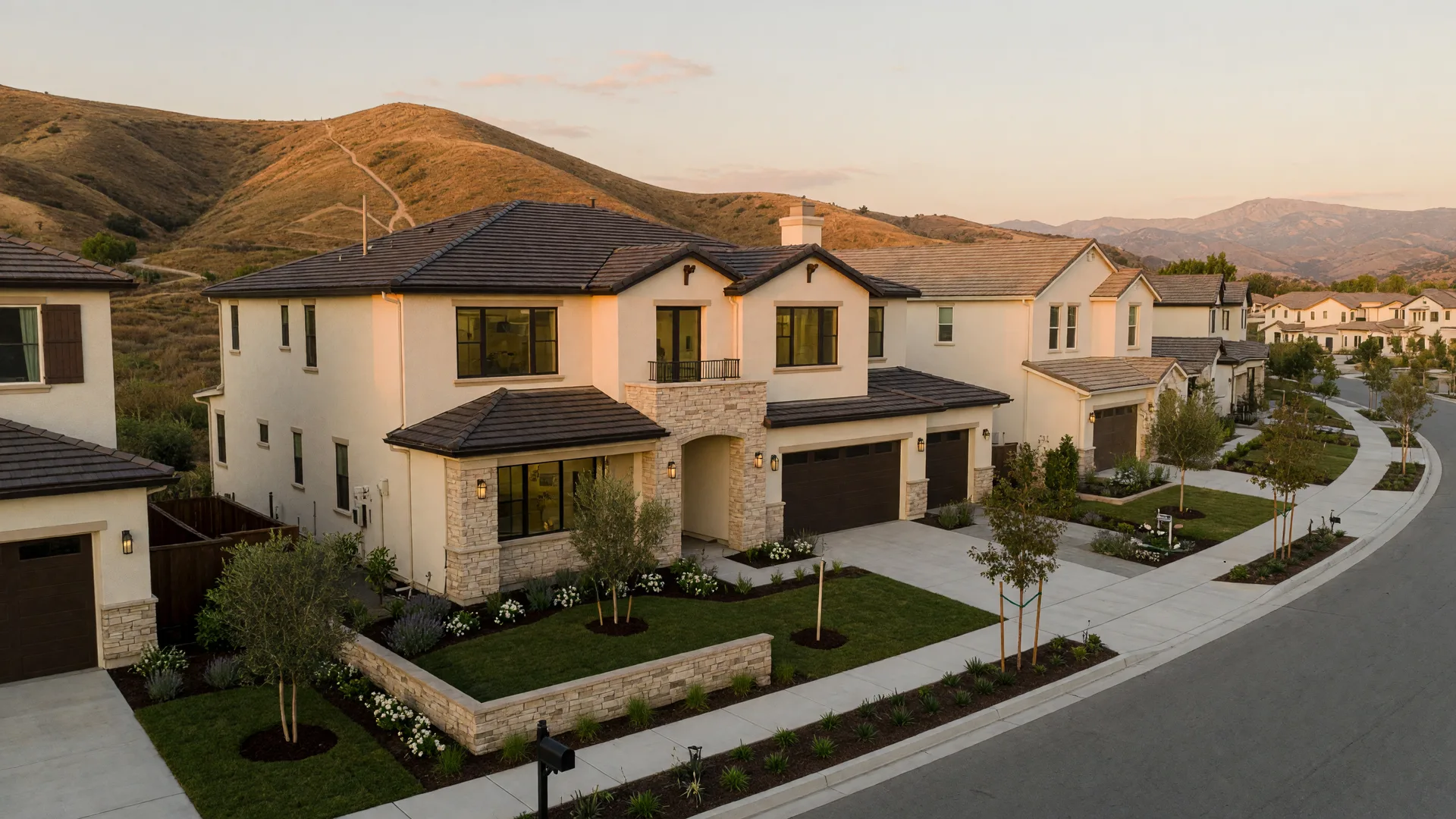
A recent r/SantaClarita thread asked the straight version of a question I hear often these days: a family member is considering a new Toll Brothers home in Tesoro, Valencia, priced over $1.7 million for roughly 3,500 square feet with 4 bedrooms and 4 baths, and they wanted the honest good, bad, and ugly before anyone signed anything. That is exactly the right way to approach a decision this size. New construction has genuine appeal, and it also carries costs and risks that do not show up in the model home brochure. Here is the straight talk, point by point, the way I would give it to a friend.
The Good: What That Price Tag Really Buys You
Let me start with the reasons this question comes up, because they are real, and at that price level they are significant.
Warranties on a brand-new home. New construction in California typically comes with builder warranties that cover workmanship and materials, major systems, and the structural frame for set periods, with the strongest protection in the early years. Terms vary from builder to builder and community to community, so the warranty document matters more than the sales pitch. But for the first year or three, the biggest repair categories are usually on the builder, not on you.
A floor plan and finishes from this decade. New homes bring open layouts, higher ceilings, current kitchens and baths, upgraded wiring and smart-home infrastructure, and finishes chosen by a modern design team rather than by a previous owner in a different era. If the aesthetic and the flow are what drew you in, that is a real and lasting part of the value.
Energy efficiency. Newer builds generally meet current state energy codes, with better insulation, double-pane windows, and more efficient heating and cooling than most older homes. That generally means lower utility bills than the older equivalent down the street, though the actual difference varies with the floor plan, the orientation, and how your family actually lives in the home.
Master-planned community life. Tesoro sits within the master-planned Valencia area, and communities of this kind typically come with recreation centers, pools, parks, trails, and a clubhouse at the heart of the neighborhood. The exact amenity list changes over time and differs by neighborhood, and some things may still be under construction, so confirm what exists today, what is planned, and what your dues actually cover before you fall in love with a rendering.
Brand-new everything. Roof, systems, appliances, floors, and finishes have zero history, zero mystery, and usually zero deferred-maintenance surprises in those first years. There is real peace of mind in that, and it is one of the genuine advantages of buying new.
Resale appeal. A new home in a desirable Santa Clarita Valley community typically holds strong appeal for the next buyer too. That is a general tendency, not a guarantee, and it is worth weighing alongside everything below.
"Educated decisions create better results. That rule matters twice as much when the number on the contract starts with seven figures."
The Bad: The Costs That Never Appear in the Base Price
Here is where new construction surprises people, and none of it is a reason to walk away. It is all a reason to plan ahead.
The new-build premium. A brand-new home typically commands a premium over comparable resale homes in the same area, sometimes a meaningful one, and the premium varies with the community and the market at the moment you are buying. The way to test it is per square foot: compare the new-build price per square foot against resale homes in Valencia, Stevenson Ranch, and Newhall at the same size and quality level. If the premium is modest and the new build fits your life, fine. If it is wide, ask what you are actually paying it for.
HOA dues plus Mello-Roos, special assessments, and special taxes. This is the big one people overlook. Newer communities are often financed in part through special districts, and a Mello-Roos line can sit on the property tax bill as a separate item, separate from the HOA dues, for a fixed term that can run decades. Some communities layer in special assessments on top as infrastructure phases are completed. Get the full tax-and-assessment picture in writing before you sign: what the HOA dues are, what the special district tax is, how long it runs, whether it steps up, and what it funds. Every one of those lines is real money you will pay every year.
The finish-out that is never in the model. The model home shows you the finished dream with every upgrade installed. The base price often does not include the backyard landscaping, the fencing, the window coverings, and in some packages even smaller items a buyer assumes are included. Those items are typically extra and are often completed by you after close, at contractor pricing. Build a finish-out budget line into your number before you compare the price with anything else.
Property taxes on a fresh assessed value. Your tax basis on a brand-new home starts at today's purchase price, not at a decades-old assessed value the way a longtime owner's would. On a home in the seven figures that is a substantial annual difference, and the online payment calculators rarely show it well. Have a local lender model the property tax line, at today's assessed value including any special district line items, in writing, before you commit.
Builder-grade finishes in some packages. Not every builder package is created equal, and the finishes in some tiers are built to a price. Walk the actual home or an earlier phase of the same plan when you can, not only the dressed-up model, and know which packages you are actually buying.
"New" still needs a good inspection. New homes can have real defects, and every year brings examples of things that should have been caught at framing, under the slab, in the HVAC, or at the final walkthrough. Order your own independent inspection before close, and do not let anyone frame that as an insult to the builder. It is standard practice, and good builders welcome it.
The Ugly: Where Buyers Actually Get Hurt
The ugly is not about the home itself. It is about the dynamics around the purchase, and naming them is the best protection a buyer can have.
The emotional pricing trap. New-home sales are engineered to feel urgent: limited releases, lot choices, upgrade windows, incentive deadlines, a beautiful model home and a soundtrack and a clock. That pressure exists to move decisions forward, and a decision this large should only be moved by your own numbers and your own timeline. Incentives and credits are real, and they are also part of a pricing structure designed by professionals whose job is to sell homes. Treat them as marketing inputs, not as the reason to decide.
Timeline and change orders. The schedule on a new build belongs to the builder first. Delays happen, with construction, permits, supply, and seasons all moving the timeline, and the buyer rarely controls it. Change orders you request after signing add both cost and time, sometimes more of both than the upgrade center made them look. Know the real completion range, not the optimistic one, and know what happens to your rate lock, your lease, and your plan if the calendar moves.
Build-out years. A community that is still filling in is a community under construction: dust, trucks, materials staging, crews, and traffic around your street for years as later phases build out around you. It is temporary, and it is loud in a way the sales center does not emphasize. Know what phase your home is in, what is still to come, and whether you can live with a construction site as your daily view for a while.
Resale risk while the neighborhood is still developing. In a neighborhood that is still selling new homes, your resale competes against the builder's own inventory and pricing, with fewer established comparable sales to anchor your value. If the market turns while the community is mid-build, new homes can sit, and buyers comparison-shop your resale against the builder's new product down the street. That is not a prediction about Tesoro, it is a general truth about buying early in a developing community anywhere.
And the honest framing question: $1.7 million buys a lot of options across the Santa Clarita Valley. The same budget fields resale homes in established Valencia neighborhoods, Stevenson Ranch, Newhall, Saugus, and Canyon Country, communities that are already built out, with mature landscaping, established comparables, and often meaningfully lower carrying costs. The new build at Tesoro might be the best fit for your family, and it might not be. The only way to know is to see the whole field before you fall for the shiny model, and to compare the new-build total cost of ownership, closing to carrying, against the resale alternative. That comparison is exactly the kind of work I do for buyers every week, and it is worth doing before anyone signs.
A Practical Checklist Before You Sign
- Order your own inspection, even on new builds. Your independent inspector reports to you, walks the actual home, and gives you the walkthrough report before the builder's punch list exists. Worth every dollar and then some.
- Read the CC&Rs and HOA docs like a contract, because they are contracts. Ask for the reserve study, confirm what the dues fund, and check the rules from year to year.
- Get the full tax and assessment estimate in writing from a local lender. Property tax at today's assessed value, the special district line items, HOA dues, insurance for the area, all of it, as a monthly number before you compare anything.
- Stack the per-square-foot comparison yourself. New build versus resales in Valencia, Stevenson Ranch, and Newhall at comparable size and finish level, and do not compare the model against the plainest resale on the market.
- Negotiate thoughtfully on upgrades and incentives. Ask what is negotiable in the upgrade package and on rate and title incentives, get every incentive, credit, and promised finish in writing, and separate "we will include it" from "we might include it." And if you are using a VA loan, have your lender walk you through new-construction specifics, since VA appraisals have their own rules.
None of this is meant to talk you into Tesoro or out of it. It is meant to make sure the home you choose is chosen with both eyes open, at a price you understand line by line, on a timeline you can live with. New construction at that level can be a wonderful home for the right family. The right family is the one that saw the whole picture first.
If your family is weighing a new build against the resale field anywhere in the Santa Clarita Valley, I would love to run that comparison with you: the real numbers, the full carrying costs, the honest trade-offs, and the whole field of homes that $1.7 million can reach. That is exactly the conversation I enjoy most, and no one should decide a number this big from a brochure alone.
Sam Silver
U.S. Army Veteran · AI-Certified REALTOR® · 22+ Years Experience
Equity Union Real Estate · CalDRE #01412755
Let's Talk Through the Good, Bad, and Ugly Together
Whether it is Tesoro, another new community, or a resale home built out and settled, I will help you compare the real numbers and find the fit for your family. No pressure, just straight answers.
Sam Silver, REALTOR, Equity Union Real Estate, CalDRE 01412755. Equal Housing Opportunity.